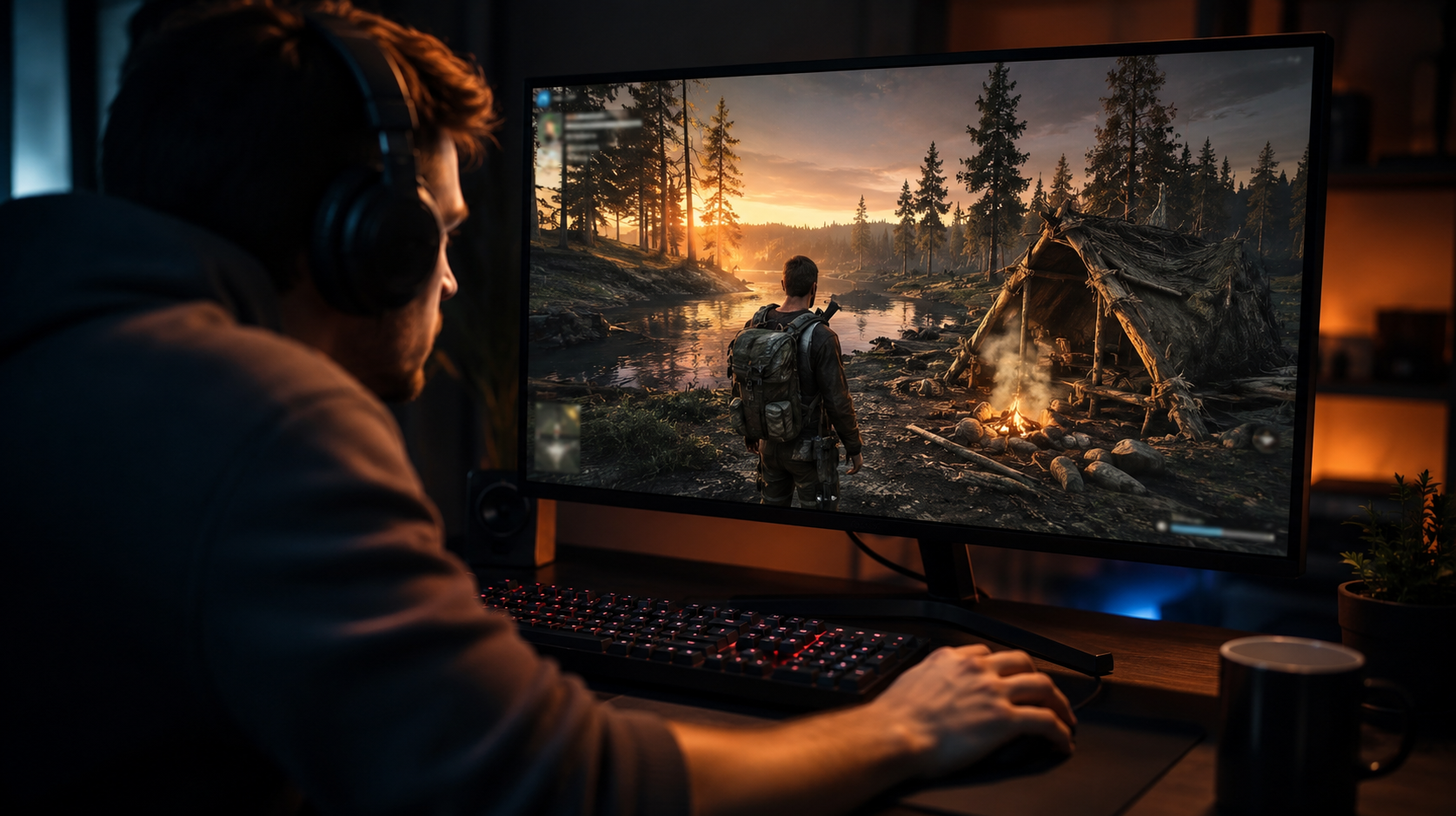
Survival games have long outgrown their niche origins. Today, they sit alongside major action titles and RPGs, attract massive audiences, and consistently top the Steam charts. Their core appeal is straightforward: players are given minimal resources, dropped into a hostile world, and left to figure out how to stay alive.
The numbers don’t lie
According to a GAMIVO study from the first quarter of 2026, survival games accounted for 18.2% of sales among roughly one thousand top-selling titles on the platform, placing third behind action-adventure games and RPGs. That said, a significant share of that demand is driven by a relatively small number of standout titles.
Why the genre hooks players
Most survival games are built around a single core loop: moving from scarcity to stability. At the start, players have almost nothing. They forage for food and water, gather materials, craft basic tools, and search for somewhere safe to rest. Over time, that makeshift shelter becomes a fortified base, and the vulnerable starting character evolves into a well-equipped explorer.
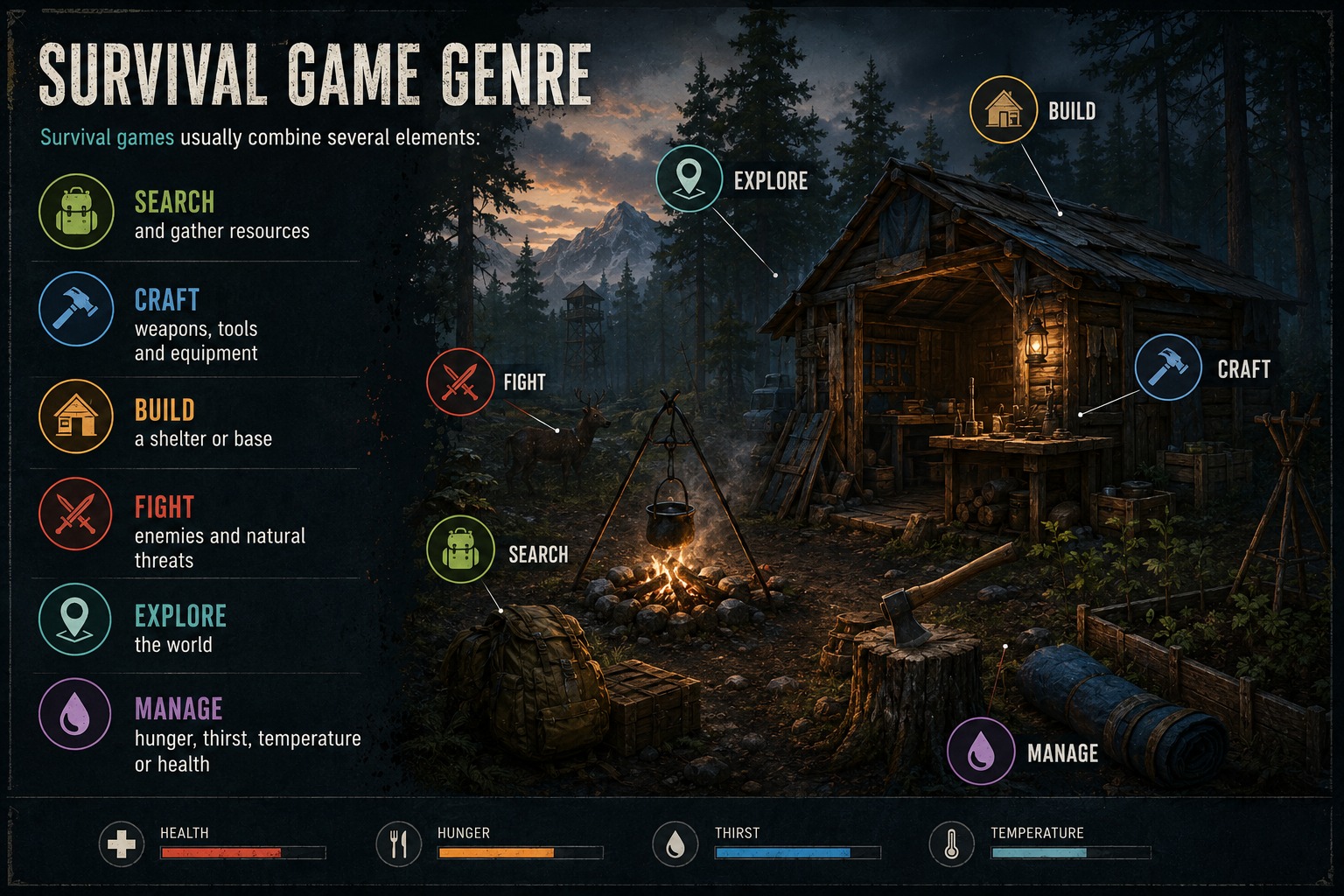
Games in this genre typically combine several key elements:
- Searching for and stockpiling resources.
- Crafting weapons, tools, and gear.
- Building a shelter or base.
- Fighting enemies and dealing with environmental threats.
- Exploring the world.
- Managing hunger, thirst, temperature, or health.
Subnautica leans into the tension of exploring dangerous ocean depths, Valheim takes players through a world rooted in Norse mythology with a strong emphasis on cooperative building, and Minecraft gives players near-limitless freedom to reshape their environment. The mechanics differ, but the underlying idea stays the same: gather, grow, and survive.
Risk makes every decision count
In most games, failure just means reloading from the last checkpoint. In survival games, the stakes are often much higher. Players can lose their gear, supplies, hard-earned progress, or even their character entirely.
That’s what turns a routine resource run into something that actually feels tense. Is it worth venturing further from base for a rare material? Will there be enough food to make it back? Is it smarter to fight or find a way around? These are the kinds of decisions that create real pressure without relying on a scripted story.
This dynamic works especially well in multiplayer, where the unpredictability of other players adds another layer on top of the world’s existing dangers. Allies can help build a thriving settlement, while rivals can raid a base the moment it’s left unguarded.
A genre that keeps evolving
In 2026, the genre continues to generate buzz thanks to some notable new releases. Subnautica 2 launched in Early Access on May 14, and StarRupture followed on January 6.
Developers are still pushing the formula in new directions. One upcoming title, Frostrail, puts players in charge of an armored train that must be maintained and upgraded as it travels through a frozen world. It’s currently targeting a Q4 2026 Early Access release.
Why players keep coming back
The real strength of survival games lies in the stories that emerge organically. Developers don’t need to script every dramatic moment. Players remember barely making it back to shelter during a storm, losing a full inventory after a risky run gone wrong, or spending several nights building something massive with friends.
On top of that, the genre offers genuine freedom. Some players want to map out every corner of the world. Others focus on perfecting their base. Some chase rare resources, while others only play with a group. That flexibility means a single game can resonate with very different types of players.
It’s that combination of risk, freedom, steady progression, and unexpected moments that has made survival games one of the most prominent and enduring forces in today’s gaming industry.